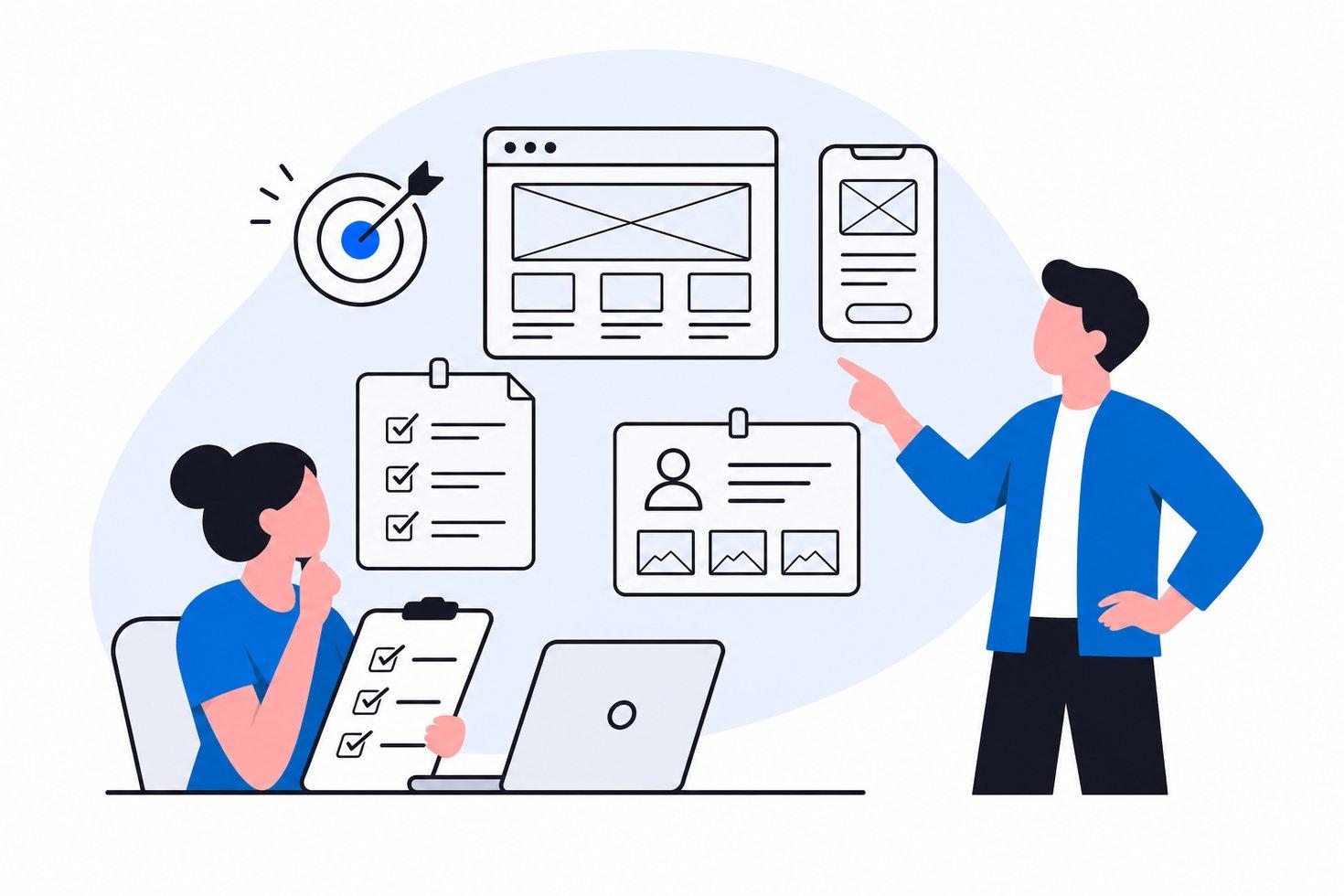


Most businesses start looking for a designer when something is already wrong: the site does not bring in leads, a new product needs an interface, or the current design no longer fits the brand. Marketplaces such as Upwork, Behance, and Dribbble make it easy to find candidates. Choosing the right one is harder, and it depends on work you do before you contact anyone.
This guide explains how to hire a UX designer: what to prepare before your first call, which hiring model fits your project, how to evaluate a portfolio, and which questions to ask.
UX designer vs UI designer: who do you actually need?
The two roles often share one job title, but they cover different work.
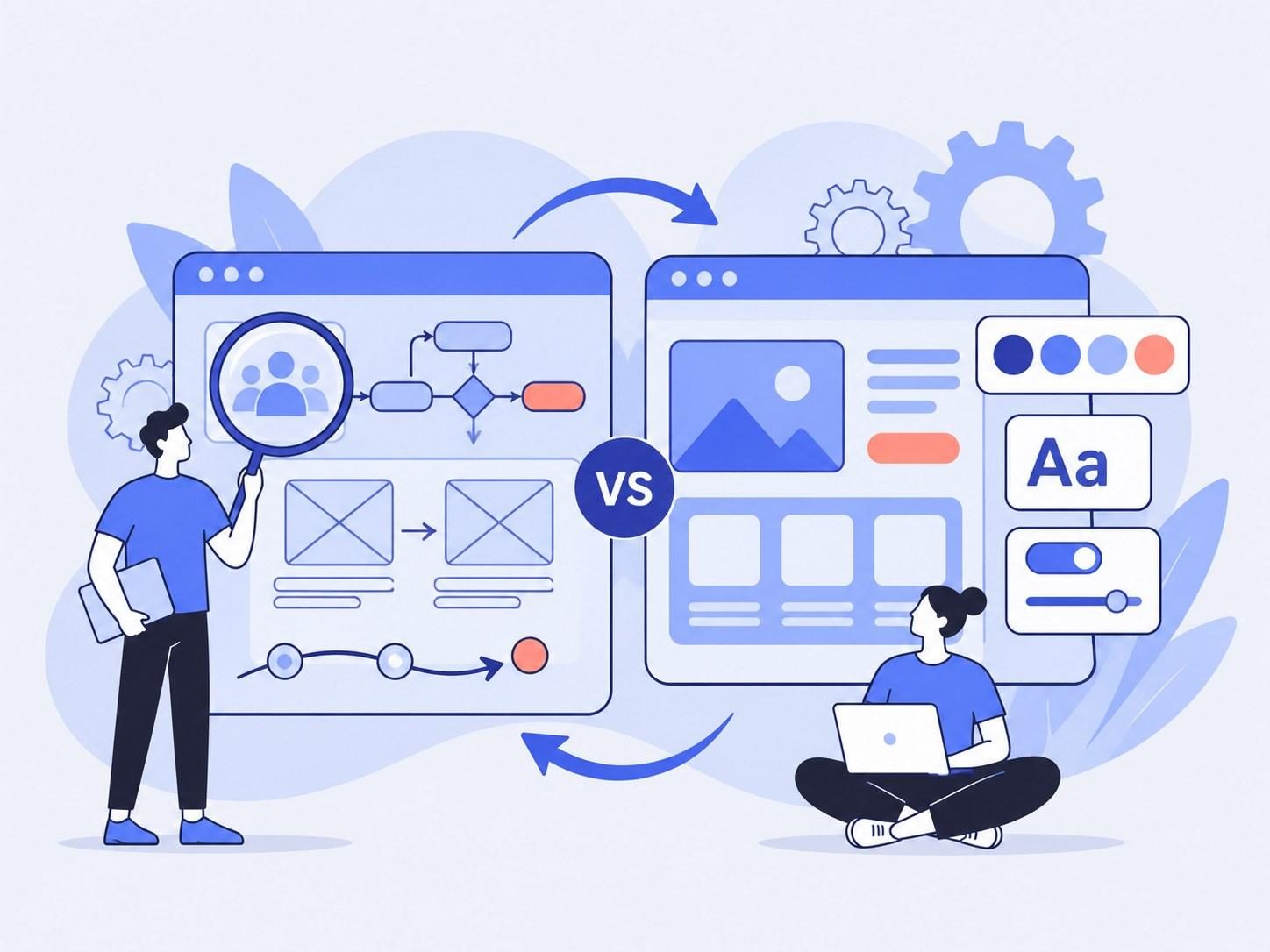
- A UX (user experience) designer works on how the product functions: user research, information architecture, user flows, and wireframes. The question a UX designer answers is whether people can complete what they came to do.
- A UI (user interface) designer works on how the product looks: layout, typography, color, components, and visual consistency across screens.
For a small business website, one UI/UX designer who covers both is usually enough. For a complex product, such as a SaaS platform or a mobile app with many user flows, the work is often split between a UX designer, a UI designer, and sometimes a UX researcher.
If you are unsure which problem you have, start from the symptom. Visitors who arrive but do not contact you usually point to UX issues. A site that works but looks dated or inconsistent points to UI work.
What to prepare before hiring a UI/UX designer
A designer can only be as precise as the brief. These are the points to settle before your first call.
Business goals and how you will measure success
Write down what the design should change for the business, in measurable terms: more enquiries from the contact form, a higher share of visitors who complete checkout, fewer support requests about how to use the product. A goal like “a modern look” gives the designer nothing to measure against.
Agree in advance on where you will check the result, for example in Google Analytics, and record the current numbers. Without a baseline, nobody can tell whether the new design worked.
Who your users are
Describe the people who use the site or product: their role, what they come to do, and what stops them today. Sales and support teams hear the most common questions and objections, so ask them before the brief is finished.
If you have no data about your users, say so. A good designer will propose user research as part of the project.
Scope: a new product, a redesign, or targeted fixes
The scope decides which designer you need and what the project costs.
- A new product needs research, information architecture, wireframes, and a full interface.
- A redesign replaces the current design and often the structure of the site.
- Targeted fixes improve specific pages or flows, such as a contact form or a checkout.
If you are not sure whether you need a redesign or fixes, an audit answers that question before you commit a budget. Our guide on UX audit vs website redesign explains how to decide, and Admiral Studios offers a free UX audit of your homepage and key pages.

Existing assets and data
Collect what the designer will need on day one:
- Brand guidelines, logo files, and fonts
- Access to the current site, the CMS, and design files, if they exist
- Analytics data: traffic, conversion paths, and pages that lose visitors
- Examples of sites or apps you like and dislike, with a note on why
Projects lose time when the designer waits for access or rebuilds assets that already exist.
Budget range and timeline
Decide on a budget range before you talk to candidates, even if it is approximate. It shows quickly which options are realistic and lets the designer propose a scope that fits.
Set the timeline from a real business date, such as a product launch or a campaign, and work backward. Include time for your own reviews and approvals, because they are part of the schedule too.
Who makes decisions and gives feedback
Name one person who collects feedback and makes the final call. When several stakeholders send separate comments directly to the designer, the comments often contradict each other and every round takes longer.
Agree on how many feedback rounds are included and in what format feedback is given, for example comments in Figma.
Freelancer, agency, or in-house designer
There are three main ways to hire a UX designer. Each fits a different situation.
| Freelancer | Design agency | In-house designer | |
|---|---|---|---|
| Best for | A defined task with a clear brief | A project that needs several skills | Ongoing product work |
| Skills | One person’s skill set | A team: UX, UI, research, often development | One person who grows with the product |
| Start | Fast | After a proposal or discovery stage | Slowest: a full hiring process |
| Management | You manage the work | The agency manages the process | You manage and develop the person |
| Continuity | Depends on one person’s availability | Covered by the team | High, while the person stays |
| Cost structure | Hourly or per project | Per project or monthly retainer | Salary, benefits, and tools |
When a freelancer is the right choice
A freelancer fits a well-defined task: a landing page, a set of screens, or improvements to an existing design system. Upwork, Behance, and Dribbble are common places to start the search.
The risk is dependency on one person. If the freelancer becomes unavailable, the project stops, so agree on file ownership and handover from the start.
When a design agency is the right choice
An agency fits a project that needs more than one skill: research, UX, UI, and often development, coordinated by a project manager. You get a team and a defined process, and the work continues if one specialist is away.
The trade-off is a higher cost and a more formal start. Ask whether the people who present the proposal are the ones who will work on your project.
When to hire in-house
An in-house designer fits a company with a product that changes every week and a steady flow of design work. The cost includes salary, benefits, software, and the time it takes to recruit and onboard. It pays off when there is enough work to fill a full time role.

How to evaluate a UX designer’s portfolio
Visual quality is easy to judge, but on its own it says little about whether the design worked. Look at how the designer explains the work.
- Case studies. A strong case study describes the problem, the research, the decisions, and the result. A gallery of attractive screens shows visual skill and leaves open whether the design solved anything.
- Results. Look for changes the client could measure, such as more sign-ups or fewer support tickets. Treat results without context or a source with caution.
- Relevance. Experience with your type of product, such as an online store, a SaaS dashboard, or a mobile app, shortens the time the designer needs to understand it.
- Process. Check whether user research, testing, or data analytics appear in the case study, or whether the design was based on taste alone.
- Range. If you need both UI and UX, the portfolio should show wireframes and user flows as well as final screens.

Questions to ask a UX designer before you hire
These questions show how the designer works:
- What do you need from us to start?
- How do you learn about our users if we have no research yet?
- Can you walk us through one case study from brief to result?
- How do you measure whether a design worked?
- How many feedback rounds are included, and what happens after that?
- Who owns the design files, and in what format do we receive them?
- Do you work with developers during implementation, or hand over the files and finish?
- What would you change on our current site first, and why?
If you are choosing between agencies rather than individual designers, our list of 20 questions to ask a web design company covers contracts, process, and support in more detail.
How much does it cost to hire a UX designer?
The cost depends on several factors:
- Hiring model. Freelancers usually charge by the hour or by project, agencies by project or monthly retainer, and in-house designers receive a salary plus benefits.
- Scope. Research, a full interface, and a design system cost more than a set of screens or targeted fixes.
- Experience and location. Senior designers and designers in high-cost markets charge more.
- Deliverables. A clickable prototype, a component library, and developer handover add work.
For an in-house role, the U.S. Bureau of Labor Statistics reports a median annual wage of $104,000 for web and digital interface designers in May 2025. Benefits, software licenses, and recruiting costs come on top of the salary. Freelance and agency rates vary too widely for a single figure to be useful, so compare proposals against the same scope.
Red flags when hiring a UX designer
- A fixed price before the designer has seen your goals, your site, or your data
- No questions about your users or business goals in the first conversation
- A portfolio with screens only and no explanation of the problem or the result
- No research or testing step in the proposed process, even for a complex product
- Unclear ownership of design files, or no plan for handover to developers
- Promises of a specific conversion increase before any review of your site
Frequently asked questions
How long does it take to hire a UX designer?
It depends on the hiring model. A freelancer or an agency can usually start within days or weeks of the first call. Hiring an in-house designer goes through a full recruiting process, which takes longer.
Should I hire a UX designer or a web developer first?
Usually the designer. Design decisions define what the developer builds, and changing a layout in Figma costs less than changing it in code. On smaller projects, an agency that covers both design and development removes the handover between the two.
Can one person handle both UI and UX design?
Yes, for most websites and smaller products. Many designers work across both areas and describe themselves as UI/UX designers. On complex products with many user flows, splitting the roles gives each area more depth.
Do I need a UX designer for a small website?
If the site is meant to bring in leads or sales, yes. Even a small site has a path from the first visit to the contact form, and a UX designer makes sure that path works. A UX audit is a quick way to check whether your current site needs design work at all.
Work with a UI/UX design team
If you want research, UX, and UI handled by one team, see our UI/UX design services. Not sure yet what your site needs? Request a free UX audit: we review your homepage, up to three key pages, and a form or checkout, and send you a prioritized list of issues in Figma within one to three business days.
Contents
1. UX Designer vs UI Designer: Who Do You Actually Need
2. What to Prepare Before Hiring a UI/UX Designer
3. Freelancer, Agency, or In-House Designer
4. How to Evaluate a UX Designer’s Portfolio
5. Questions to Ask a UX Designer Before You Hire
6. How Much Does It Cost to Hire a UX Designer
7. Red Flags When Hiring a UX Designer
8. Frequently Asked Questions
Back to the top